
Soft Gel Capsule Manufacturing is a specialized process that converts liquid or semi-solid formulations into smooth, easy-to-swallow dosage forms. It combines formulation science, precision engineering, controlled heating, and strict quality testing. A typical production line begins with preparing the fill material, often containing oils, vitamins, extracts, or approved pharmaceutical ingredients. The capsule shell usually uses gelatin, plasticizers, water, and permitted colorants. Some products require alternative shell materials.
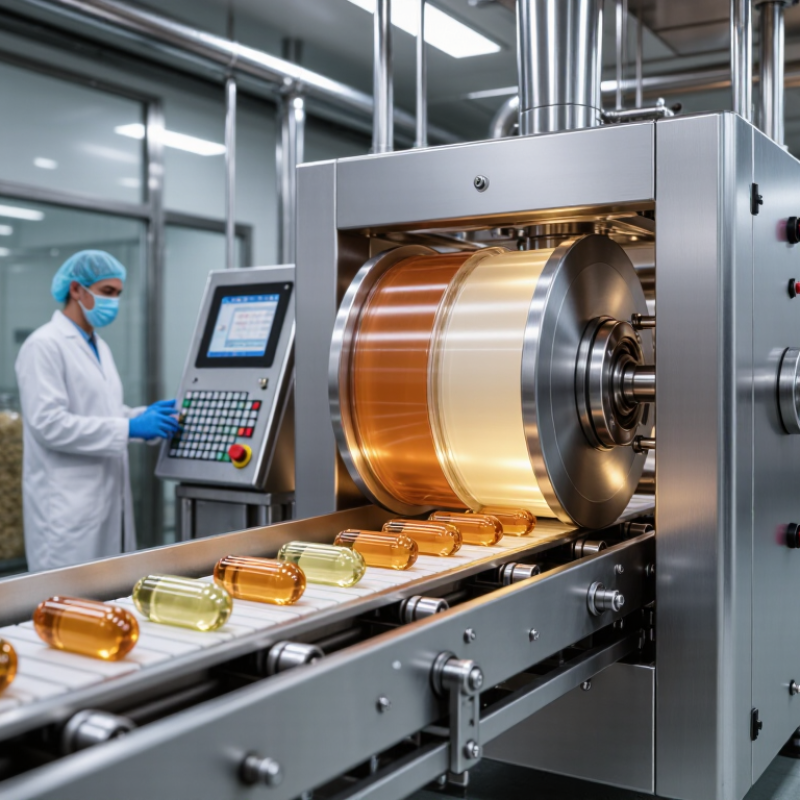
The details matter. A rotary die machine forms two warm gelatin ribbons around the measured fill. Pressure seals the edges and creates consistent capsules. Afterward, controlled drying removes excess moisture without making the shell brittle. Operators monitor temperature, humidity, fill weight, seal strength, appearance, and microbial quality. Clear records support traceability from incoming materials to finished batches. Qualified facilities also follow applicable good manufacturing practices and recognized pharmacopeial standards.
It looks simple from outside.
In practice, small changes can affect performance. A slight moisture shift may change capsule softness. Poor viscosity control can cause leakage or uneven filling. Experienced teams therefore use validated procedures, calibrated equipment, and trained judgment. Testing must confirm identity, potency, stability, and dissolution when required. The process is not perfectly uniform. Formulas may need adjustment after pilot trials, especially when ingredients react differently under heat or pressure. This article explains each major stage, the equipment involved, and the quality decisions behind reliable Soft Gel Capsule Manufacturing. It also considers practical limitations, because efficient production should never replace patient safety, honest documentation, or careful technical review.
What Is Soft Gel Capsule Manufacturing?
Definition and Purpose of Soft Gel Capsules
Soft gel capsule manufacturing is the controlled process of forming, filling, and sealing flexible capsules. A softgel usually contains a liquid, oil-based, or semi-solid formulation inside a gelatin or plant-based shell. The shell protects the contents from handling and can make swallowing easier. It also offers a consistent unit for measured doses. Small details matter.
The main purpose of a softgel is practical protection and delivery. Its sealed shell can reduce exposure to air, moisture, and light, depending on the formulation and packaging. Manufacturers carefully control shell temperature, fill weight, drying time, and seal quality. In my experience, small changes in viscosity can affect filling accuracy and capsule appearance. Quality teams therefore inspect samples, verify weight uniformity, and monitor storage conditions.
The process begins by preparing the shell material and the internal fill. Forming dies create two ribbons, while filling equipment places the formulation between them. Pressure then seals and cuts each capsule. Drying removes excess moisture without making the shell brittle. A common mistake is treating appearance as proof of quality. Clear surfaces help, but laboratory testing remains essential. Testing may examine identity, potency, leakage, disintegration, and microbial quality. Some formulations still need refinement, especially when ingredients separate during storage. Careful validation helps identify these weaknesses before routine production.
| Manufacturing Dimension | Definition or Process | Typical Materials or Parameters | Purpose and Quality Consideration |
|---|---|---|---|
| Product Definition | A soft gel capsule is a single-piece, hermetically sealed dosage form with a flexible gelatin-based or non-gelatin shell surrounding a liquid, semisolid, or suspension fill. | Shell-forming polymer, plasticizer, purified water, and an encapsulated formulation. | Provides accurate unit dosing, protection from environmental exposure, and convenient oral administration. |
| Shell Preparation | Shell ingredients are combined, heated, hydrated, and mixed to create a uniform gel mass before casting. | Gelatin or an alternative polymer, glycerol or sorbitol, purified water, colorants, and permitted opacifiers. | Controls shell strength, elasticity, appearance, moisture content, and sealing performance. |
| Fill Formulation | The active ingredient is dissolved, dispersed, or suspended in a compatible liquid or semisolid vehicle. | Oils, polyethylene glycols, surfactants, suspending agents, antioxidants, and active pharmaceutical or nutritional ingredients. | Supports dose uniformity, chemical stability, bioavailability, and compatibility with the shell. |
| Gelatin Ribbon Formation | The prepared shell mass is cast into two continuous ribbons of controlled thickness. | Ribbon thickness commonly falls within approximately 0.6–1.2 mm, depending on capsule design and formulation. | Uniform ribbons help maintain consistent capsule dimensions, fill volume, and mechanical strength. |
| Encapsulation | A rotary die process forms the capsule shape, injects the fill, and joins the shell ribbons in one continuous operation. | Controlled die size, injection volume, machine speed, ribbon temperature, and fill temperature. | Creates sealed capsules with controlled weight, dimensions, shape, and active-ingredient content. |
| Seam Formation | Heat and pressure fuse the two shell ribbons around the fill, producing a continuous seal. | Seam integrity, seal width, shell temperature, and pressure are monitored during production. | Prevents leakage, oxidation, moisture ingress, and loss of fill material. |
| Drying and Conditioning | Freshly formed capsules are dried under controlled airflow and then conditioned until the shell reaches its target moisture balance. | Temperature, relative humidity, airflow, drying time, and shell moisture content. | Reduces deformation and sticking while improving shell stability and handling strength. |
| Inspection and Sorting | Capsules are inspected manually or with automated systems and defective units are removed. | Visual appearance, leakage, dents, bubbles, agglomeration, color consistency, and dimensional defects. | Ensures that only capsules meeting established specifications proceed to packaging. |
| Weight and Content Control | Samples are tested for total weight, net fill weight, assay, and dosage-unit uniformity. | In-process weight checks, laboratory assay, fill-volume measurement, and sampling plans based on applicable standards. | Confirms that each capsule delivers the intended amount of active ingredient within specification. |
| Dissolution and Disintegration | Laboratory tests measure how the shell opens and how the fill becomes available in a specified test medium. | Test medium, temperature near 37°C, agitation rate, sampling time, and product-specific acceptance criteria. | Verifies release performance and supports consistent delivery of the active ingredient. |
| Packaging and Storage | Approved capsules are packed in containers or blister systems that protect them during distribution and use. | Moisture-barrier packaging, controlled temperature, protection from excessive humidity, light, and heat. | Maintains capsule appearance, shell integrity, chemical stability, and labeled shelf life. |
| Primary Purpose | Soft gel capsules are manufactured to enclose and deliver liquid or semisolid ingredients in a convenient, accurately dosed oral form. | Suitable for many oil-soluble ingredients and selected water-soluble or suspension-based formulations. | Can improve swallowability, mask unpleasant tastes or odors, and help protect sensitive ingredients from air and light. |
It is the controlled process of forming, filling, sealing, and drying flexible capsules. Small details matter. Each capsule usually contains a liquid, oil, or semi-solid formulation.
A common shell contains gelatin, purified water, and plasticizers such as glycerol or sorbitol. Plant-based shells may use modified starch, carrageenan, or other polymers. These materials affect softness, elasticity, and sealing.
The fill may contain oils, dissolved nutrients, suspended powders, or uniform active ingredients. Its viscosity must match the equipment. A changing texture can reduce filling accuracy.
Heated shell material becomes two flexible ribbons. Precision pumps place measured fill between them. Rotating dies press, shape, seal, and cut the capsules.
Fresh capsules contain excess moisture. Controlled drying gradually removes it and develops the target texture. Rushing this step may leave hidden moisture inside.
Teams check weight, appearance, leakage, seam integrity, disintegration, potency, identity, and microbial quality. Laboratory testing remains essential. A shiny surface proves very little.
Temperature and humidity can change shell texture and formulation stability. Excess moisture may weaken the shell. Insufficient moisture may make it brittle.
Ingredients may separate during storage, or capsules may show dents, uneven seams, or weight variation. Equipment settings and humidity can shift results. The process is not foolproof.
They should keep the fill uniform and record every temperature adjustment. Calibrated scales, documented sampling, and complete batch records support traceability. Human review still matters.
Soft Gel Capsule Manufacturing is the controlled process of producing soft, sealed capsules designed to deliver liquid, semi-solid, or oil-based formulations. The process begins with selecting suitable active ingredients, carriers, colorants, and excipients, while the capsule shell is typically prepared from gelatin or a suitable plant-based alternative, water, and plasticizers. These components are carefully blended to achieve the required texture, strength, stability, and appearance.
During production, the formulation is encapsulated between two warm shell ribbons, then shaped, sealed, dried, and inspected. Quality control tests may evaluate weight uniformity, seal integrity, appearance, dissolution, moisture, microbial safety, and ingredient consistency. After approval, capsules are packaged in protective containers that limit exposure to heat, light, air, and humidity. Proper storage helps maintain their quality throughout the intended shelf life. Soft gel capsules are commonly used for nutritional supplements, pharmaceutical products, and other regulated health-related preparations requiring convenient dosage and improved swallowing characteristics.