
30+ Years of Nutraceutical Manufacturing cGMP 21 CFR 111 · NSF Registered GMP
Hauppauge, New York, USA (631) 951-4908
0%

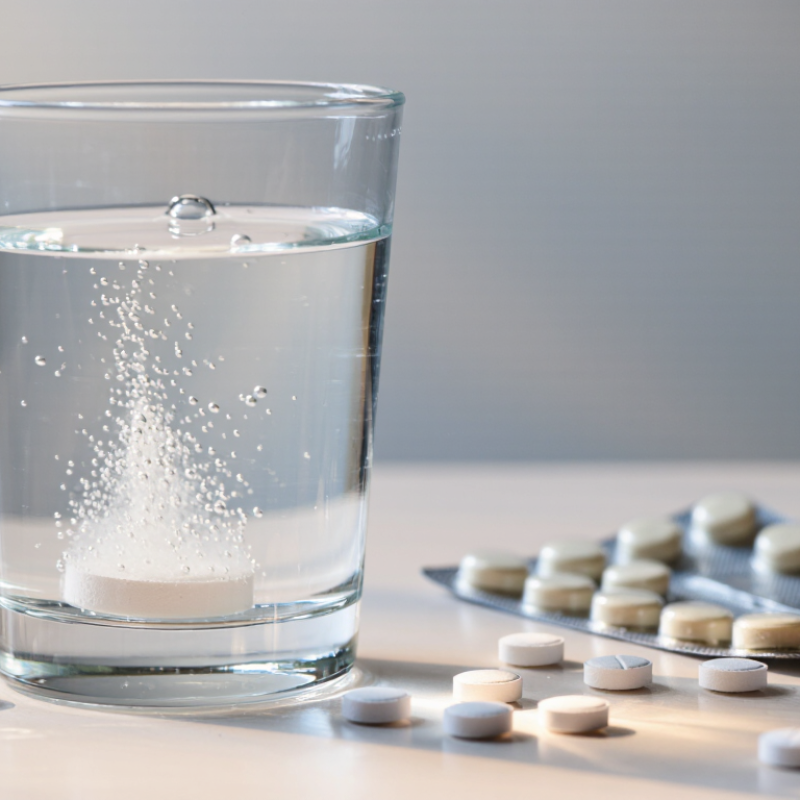
Effervescent Tablets turn a measured dose into a sparkling solution. They usually contain an acid, such as citric acid, and an alkaline carbonate. When water reaches the tablet, these ingredients react and release carbon dioxide bubbles. The fizz helps break the tablet apart and distribute its ingredients through the liquid. Simple chemistry. Useful delivery.

Pharmaceutics expert Dr. Michael J. Rathbone has described effervescent dosage forms as “a practical way to deliver medication in a rapidly dispersed liquid.” This principle explains their appeal: the user drops one tablet into a glass, watches the bubbles rise, and waits until the solution becomes clear. The resulting drink may be easier to swallow than a conventional solid tablet. It can also support a more pleasant experience for people who dislike swallowing pills.

Still, effervescence is not magic. Moisture can trigger a premature reaction, so manufacturers use protective packaging and carefully controlled production conditions. The tablet must balance hardness, rapid dissolution, taste, stability, and accurate dosing. That balance is easy to underestimate. A tablet that fizzes quickly may not always provide the best user experience. Excessive gas, strong acidity, or an unpleasant aftertaste can reduce acceptance.

This guide explores what Effervescent Tablets contain, how their acid–base reaction works, and why water quality and temperature can matter. It also considers storage, labeling, and responsible use. Some explanations may appear straightforward, yet formulation science often contains trade-offs. Understanding those details helps readers evaluate claims more carefully and use these products as directed.
What Are Effervescent Tablets and How Do They Work?

What Effervescent Tablets Are and What They Contain

Effervescent tablets are solid medicines or supplements designed to dissolve in water before use. Their core chemistry combines an acid, usually citric or tartaric acid, with sodium bicarbonate or another carbonate. Water activates the reaction, releasing carbon dioxide bubbles. That familiar fizz helps disperse the active ingredient throughout the drink. The tablet may also contain vitamins, minerals, sweeteners, flavors, colorants, binders, and moisture-control agents.

The composition is more technical than it appears. The European Pharmacopoeia and USP-NF emphasize identity, dosage accuracy, dissolution, and stability testing for pharmaceutical preparations. Small moisture exposure can begin the reaction early. Poor packaging may leave a softened tablet instead of a clean, fast-dissolving dose. According to IQVIA’s Global Use of Medicines 2024 report, worldwide medicine spending could exceed US$2.3 trillion by 2028. That broader market trend supports continued interest in convenient dosage forms, including effervescent products. Market estimates differ, though, because some reports include dietary supplements while others count medicines only. This makes comparisons imperfect.

A well-designed tablet should dissolve evenly, without excessive residue or an unusually harsh taste. Sodium content also deserves attention, especially for people following restricted diets. I would not assume “dissolved” means “better absorbed”; absorption depends on the active ingredient and formulation. The label matters. Look for the active amount, serving instructions, allergens, sweeteners, and storage conditions before use.

How Effervescent Tablets Produce Their Fizzing Reaction

What Are Effervescent Tablets and How Do They Work?

Effervescent tablets create their fizz when they meet water. Their formula usually contains an edible acid and a bicarbonate compound. Water allows these ingredients to dissolve and react. The reaction releases carbon dioxide gas. Those tiny bubbles rise through the liquid and produce the familiar crackling sound.

The process is simple, but not perfectly controlled. Water temperature can change the reaction speed. Warmer water often makes the tablet dissolve faster, while cooler water may slow it down. However, very hot water can affect some active ingredients. The tablet’s shape, compression, and coating also influence how quickly the fizz appears. That is the visible clue.

Moisture is another important detail. If humidity enters the packaging, the tablet may soften or react before use. A practical habit is keeping the container closed and using dry hands. Place the tablet in the recommended amount of water, then wait until it has dissolved. Drinking it too early may leave undissolved particles and a sharper taste. The bubbles are not the benefit themselves. They mainly help break apart the tablet and distribute its ingredients through the liquid. That explanation is useful, though the exact experience can vary between formulations.

How to Use Effervescent Tablets Correctly in Water

Effervescent tablets dissolve in water and release carbon dioxide bubbles. This reaction helps disperse the tablet’s active ingredients through the drink. The result is usually a lightly fizzy solution with an even taste. However, the tablet is not designed to be swallowed whole.

Use the water amount stated on the package. A medium-sized glass is common, but instructions can differ. Add water first, then drop in the tablet. This reduces splashing and makes the reaction easier to observe. Use cool or room-temperature water unless the directions say otherwise. Hot water may affect some ingredients. Wait until the bubbling has mostly stopped, then stir gently and drink it promptly.

Do not chew, crush, or swallow the tablet dry. That can cause choking or leave ingredients poorly dissolved. Check the solution for unusual color, odor, or undissolved pieces before drinking. Some tablets contain sodium, sugar, or sweeteners, which may matter for people with specific health conditions. I once assumed stronger fizz meant better results, but that is not a reliable measure. A tablet may work normally with only mild bubbles. If the instructions are unclear, ask a pharmacist or healthcare professional. Pay attention to serving limits, especially when combining supplements or medicines.

How the Dissolved Ingredients Enter the Body

What Are Effervescent Tablets and How Do They Work?

How the Dissolved Ingredients Enter the Body

Effervescent tablets are designed to dissolve in water before they are swallowed. Their acids and carbonates react, releasing bubbles of carbon dioxide. The fizz helps break the tablet apart and spread its ingredients through the liquid. A clear glass may still contain tiny particles.

After drinking the solution, the dissolved ingredients travel through the stomach. Water-soluble nutrients and medicines can then move toward the small intestine, where much absorption occurs. The intestinal lining transfers suitable molecules into the bloodstream. From there, blood carries them to tissues or to organs that process them.

This route can feel easier than swallowing a solid tablet. It may also help people who struggle with pills. However, “dissolved” does not mean “absorbed immediately.” Food, stomach acidity, hydration, and the ingredient’s chemical form can change the process. Some substances absorb partly in the stomach, while others depend mainly on the small intestine.

A practical detail matters: drink the solution soon after it stops fizzing, following the product directions. Do not assume extra water makes absorption better. It may only dilute the serving. Effervescent tablets are convenient, but convenience is not proof of superior effectiveness. Evidence should guide that claim. Dosage instructions still matter, especially for people with dietary restrictions or medical conditions.

Benefits, Limitations, and Safety Considerations

What Are Effervescent Tablets and How Do They Work?

Effervescent tablets dissolve in water before you drink them. An acid and a carbonate or bicarbonate react, releasing bubbles of carbon dioxide. This reaction helps disperse the active ingredient through the liquid. The drink may feel easier to swallow than a solid tablet. Some people also prefer its taste and faster preparation.

The benefits are practical, but not universal. A dissolved dose can help people who struggle with swallowing. It may also improve convenience during travel or daily routines. However, many effervescent products contain sodium, sugar, sweeteners, or acidic ingredients. This matters for people with high blood pressure, kidney disease, heart conditions, diabetes, or dental sensitivity. The label deserves careful attention.

The format feels simple. Safety is not always simple. Never swallow these tablets dry, and use the stated volume of water. Wait until bubbling has stopped, unless the instructions say otherwise. Taking too little water may produce an overly concentrated drink. Moisture can also damage tablets, so store them in their original, tightly closed container. Check the expiry date and avoid tablets that look cracked or unusually damp. Some medicines interact with other treatments or medical conditions. A pharmacist or clinician can check the ingredients, especially for children, pregnancy, allergies, or regular prescription use. I used to view the bubbles as harmless convenience; that assumption can overlook sodium content and dosing instructions.

FAQS

What makes an effervescent tablet fizz in water?

An edible acid reacts with a carbonate or bicarbonate compound. Water helps them dissolve and release carbon dioxide bubbles.

Do the bubbles provide the main benefit?

Not usually. The fizz mainly breaks apart the tablet and spreads its ingredients through the liquid.

Does water temperature affect the reaction?

Yes. Warm water often dissolves tablets faster. Very hot water may affect some active ingredients, so follow the instructions.

How much water should I use?

Use the stated volume on the label. Too little water can create a stronger taste and a more concentrated drink.

Can I swallow the tablet dry?

No. Dissolve it in water first. Wait until bubbling has stopped and visible pieces have disappeared.

How should I store these tablets?

Keep them in their original, tightly closed container. Use dry hands. Humidity can soften tablets or trigger early fizzing.

What should I check before taking one?

Check the ingredients, serving instructions, and expiry date. Sodium, sugar, sweeteners, or acids may matter for some people.

Who should ask a healthcare professional first?

People with high blood pressure, kidney disease, heart conditions, diabetes, or dental sensitivity should ask. Children, pregnant people, and those taking regular medicines should also check.

Can a damaged tablet still be used?

Avoid tablets that look cracked, damp, or unusually soft. The reaction may become uneven. The decision is not always obvious.

Conclusion

Effervescent Tablets are solid dosage forms designed to dissolve in water and release their ingredients as a refreshing, lightly carbonated drink. They commonly contain active nutrients or medications together with an acid and an alkaline compound. When water is added, these components react and produce carbon dioxide bubbles, helping the tablet break apart and distribute its contents throughout the liquid.

To use Effervescent Tablets correctly, place the recommended amount in a full glass of water and wait until the fizzing and dissolving process is complete before drinking. The dissolved ingredients can then pass through the digestive system and be absorbed by the body. This format may offer convenient preparation, easier swallowing, and more even mixing, but it also has limitations, such as added sodium, sugar, or sensitivity to moisture. Users should follow the product instructions, avoid exceeding the suggested serving, and consider professional advice if they have allergies, dietary restrictions, or medical conditions.

Olivia

Olivia

Olivia is a professional marketing specialist with extensive experience in developing clear, engaging, and insight-driven content for business audiences. As a valued member of our team, she combines strong market awareness with a deep understanding of our products, services, and customer needs. Her......